Restaurants posts, made by the agent
A kitchen is at its busiest exactly when social media wants to be fed. Service runs through the two windows — midday and evening — that also happen to be when a post would land best, and nobody standing on a line is going to stop to write a caption. So the account goes quiet for a fortnight, then gets four photos of the same dish in one afternoon. The three posts below were made for a fictional bistro without anyone opening the camera app: a daily-special card, a short piece on why the menu changes, and a carousel walking through a dish's provenance.
What you are looking at
Three posts for Olive & Ember, a brand we invented to demonstrate output — not a customer. Two short videos and one carousel, produced by the same agent that would run a real restaurants account, from a brief and nothing else. No footage was shot and no one wrote the copy.
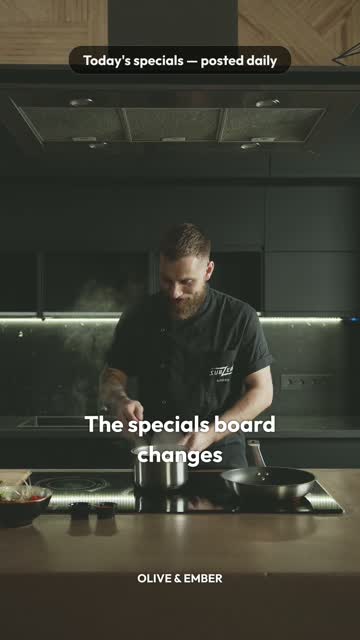 Video + CTA bar
Today's board, written at 6am and posted before the first table sat down.
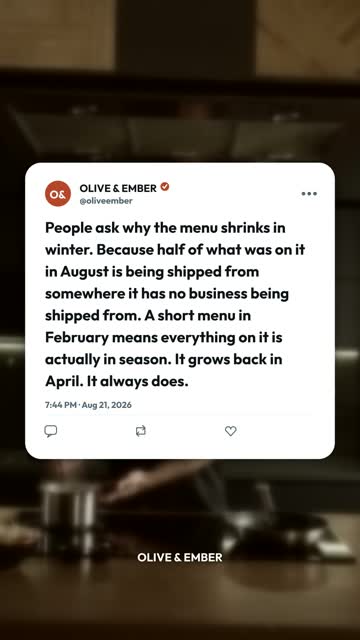 Post card
Why the menu is shorter in February. A genuine answer, not a marketing one.
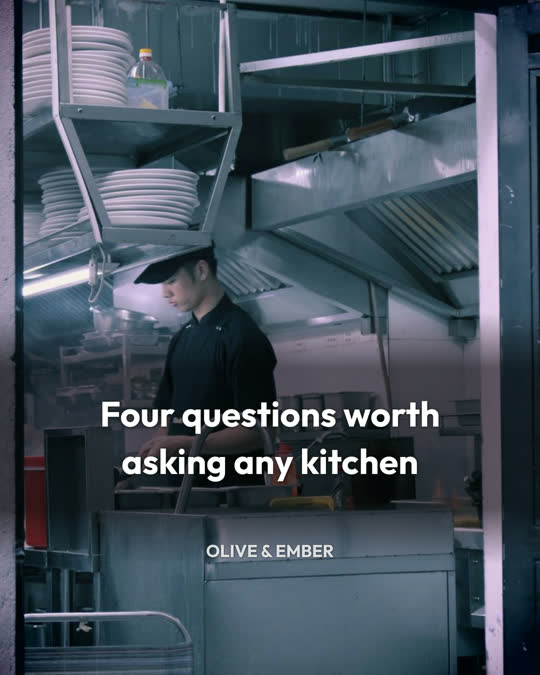 Carousel
Where the lamb comes from — four slides, no marketing language.
Hover a card to preview it, or open one to watch the whole post. Previews are silent.
Why these three formats
Food is one of the few categories where footage does most of the persuading, so two of the three lead with motion and keep the text short. The carousel takes the opposite job — it is where a sourcing story or a menu change can actually be read at the viewer's pace rather than raced through in fifteen seconds.
What the agent was given
The brief for Olive & Ember was roughly what a real restaurants would supply during onboarding: who the audience is, what the brand sounds like, two colours and a name. Everything on this page follows from that — the agent picked the formats, wrote the lines, chose the footage and rendered the files. A real account then gets the same thing on a schedule, with each post held for approval before it publishes.
The catch worth knowing
These are samples, so they are the agent working from a brief rather than from results. A live restaurants account gets better than this within a few weeks, because it starts reading its own performance data and shifts the format mix towards whatever that particular audience saves and shares. What you cannot see here is that feedback loop, which is the part that actually compounds.
Music
Tracks are licensed under Creative Commons Attribution and credited here as the licence requires. The same credit travels in each file's metadata, and in the caption when a post is published.
- 🎵 Music: "Braineating Zombies from Area 51" by moolen (ccMixter, CC BY 3.0)
- 🎵 Music: "Little Penguin" by gurdonark (ccMixter, CC BY 3.0)
Want this running on your restaurants account?
See what the agent does for restaurants, or start now.
Get Started